


The initial and arguably most crucial step in how to set up a rabbit cage involves purchasing a cage spacious enough to comfortably house your rabbit. Rabbits are active creatures that require ample room to move freely, stretch out, stand upright, and engage in natural behaviors. A cramped enclosure can lead to stress, boredom, and even physical ailments. As a general guideline, ensure that your rabbit can stand on its hind legs without its ears touching the top of the cage. For most average-sized rabbits, a cage offering at least 32 square feet (approximately 3 square meters) of interior space is recommended. Larger breeds, such as English Lops and Flemish Giants, may necessitate even more expansive accommodations, potentially requiring cages as large as 44 square feet (4 square meters). Furthermore, if you plan to house more than two rabbits together, opting for the next larger size is essential to prevent overcrowding and ensure each individual has sufficient personal space.

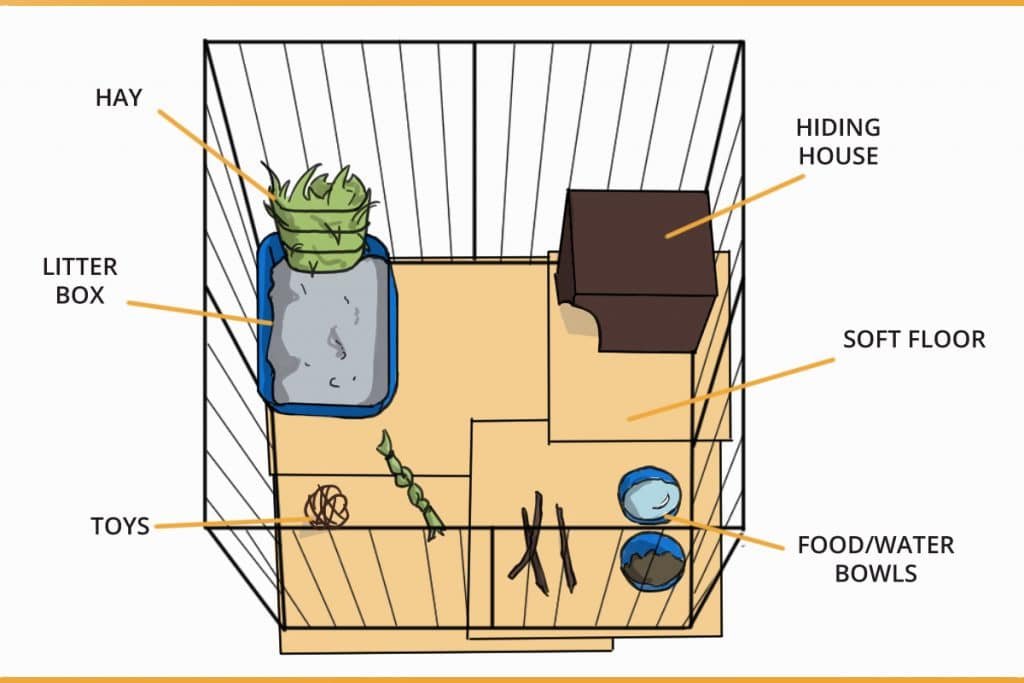
Beyond the overall dimensions, considering the internal configuration is vital. Investing in a subdivided or multi-level cage can significantly enhance your rabbit’s sense of security and well-being. Rabbits are naturally inclined to seek out dark, enclosed spaces for rest and refuge. A cage with separate compartments or levels provides them with the opportunity to retreat and enjoy privacy whenever they desire, mimicking their natural burrowing instincts. While partitioned cages may come with a higher price tag compared to standard single-room models, the added internal space and the provision of a secure retreat can be well worth the investment. Regardless of the chosen cage type, it is crucial to ensure that each rabbit within the enclosure has its own dedicated shelter or hiding space. This private area serves as a healthy outlet for coping with stress and promotes a feeling of safety and security.
The construction of the cage floor is another important consideration when learning how to set up a rabbit cage. Opting for a cage with a sturdy plastic bottom is generally preferable to those with exposed wire bottoms. Wire flooring can pose several risks to rabbits, including the potential for their delicate feet to become snagged, leading to injuries, and the development of painful sores on their hocks (the lower part of their hind legs) due to prolonged contact with the hard, unyielding surface. Cages with solid plastic bottoms offer a more comfortable and supportive surface for your rabbit’s paws. Additionally, they are significantly easier to line with bedding and to clean, contributing to a more hygienic environment. If you already possess a wire-bottomed cage that you intend to use, it is strongly recommended to mitigate the risks by placing a flat piece of cardboard or a scrap of wood over the wire to provide your bunny with a more comfortable and solid surface to stand on.
Accessibility is also a key factor to consider when selecting a rabbit cage. Choosing a cage with a large door will greatly facilitate the routine tasks of cleaning, replenishing food and water, and introducing or removing accessories such as food dishes, water bottles, beds, litter boxes, and toys. A sufficiently wide opening will also ensure that there is ample space for your rabbit to enter and exit the cage comfortably without feeling confined or stressed. Some cages are designed with multiple entrance points, such as an additional side door or an oversized hatch on the top, which can further simplify the process of managing the cage’s interior.
Finally, when considering how to set up a rabbit cage, it is essential to make sure there’s ample room for exercise. Rabbits are naturally energetic animals and require sufficient space to hop, run, and explore. A cage that primarily serves as a confinement space without allowing for adequate movement can negatively impact their physical and mental health. Ideally, your rabbit should be able to take at least three to four full hops from one end of the cage to the other. In a standard 32 square foot cage, a significant portion of the space should be dedicated to play and exploration, with only a smaller area allocated for feeding and sleeping. Incorporating simple exercise accessories, such as rabbit-safe balls and cardboard boxes, can further enhance the environment by creating a miniature obstacle course for your rabbit to navigate and enjoy.
Once the appropriate cage has been selected, the next phase of how to set up a rabbit cage involves adding basic amenities to ensure your rabbit’s comfort and well-being. The first of these is rabbit-safe bedding. Providing a suitable substrate on the cage floor is crucial for absorption, insulation, and comfort. Look for bedding materials specifically designed for rabbit habitats or those explicitly labeled as safe for rabbits. Hay, particularly Timothy hay for adult rabbits (Alfalfa hay is more suitable for young or pregnant rabbits), is an excellent all-around choice as it is edible, provides insulation, and encourages natural foraging behavior. Other suitable options include dust-free bedding made from recycled wood pulp or paper. It is imperative to avoid using pine or cedar chips or shavings as bedding, as these contain aromatic oils that can be toxic to rabbits and may cause respiratory problems or liver damage.
The bedding material should be spread evenly along the bottom of the cage to a minimum depth of 2 to 3 inches (5.1 to 7.6 cm). If using hay, consider mounding it around the edges of the cage to create areas for grazing while leaving an open space in the center for play and rest. For enhanced cleanliness and added protection against leaks, you may consider placing a layer of absorbent puppy pads or newspaper beneath the bedding material. Providing a deep layer of bedding is also crucial for preventing sore hocks, a painful condition that can occur when rabbits sit for extended periods on hard, damp surfaces. Deep bedding provides cushioning and helps to lift your pet away from soiled spots.
Creating a designated place for a bed can further enhance your rabbit’s comfort. While rabbits will often sleep on any soft surface, a separate bed provides a cozy and secure area for rest. Place the bed in a corner or along a wall to maximize the remaining space for other activities. Rabbit beds are available in various styles, including woven mats, small hammocks, and plush beds similar to those used for dogs.

Introducing a litter box is a highly recommended step in how to set up a rabbit cage, as it can significantly improve hygiene and simplify cage cleaning. Select a small litter box appropriate for the size of your rabbit and cover the bottom with a layer of recyclable paper-based litter. A mixture of shredded newspaper and hay can also be used as an alternative. It is crucial to stay away from clumping cat litters, as these can be dangerous to rabbits if ingested.
The provision of food, water, and toys completes the essential setup of a rabbit cage. An installed water bottle is a convenient way to provide your rabbit with a continuous supply of fresh, clean water throughout the day. Mount the bottle securely to the side of the cage, ensuring that the nozzle is positioned at a comfortable height for your rabbit to access without straining. A 20 oz (600 ml) water bottle is generally sufficient for a single rabbit for about two days, or for two rabbits for one day. However, it is often best to provide each rabbit with its own water bottle to avoid potential competition. While some rabbits may prefer to drink from a bowl, bowls are more prone to being tipped over and can easily become contaminated with food, droppings, and bedding, necessitating more frequent cleaning.
A food dish should be placed inside the cage, choosing a size that is adequate for holding a day’s portion of food while still being easy to maneuver in and out of the cage. Position the food dish slightly away from the water source to prevent the food from becoming damp. If you prefer to offer a more varied diet, consider using two separate dishes: one for pellets and one for fresh fruits and vegetables. An alternative feeding method is scatter feeding, where pellets or greens are sprinkled throughout the cage. This encourages natural foraging behaviors and provides mental stimulation for your rabbit.
Fill the food dish with a well-balanced dry food, such as high-quality pellets or an organic dry food mix specifically formulated for rabbits. These dry foods are typically nutrient-dense, so a small handful per day is usually sufficient. Rabbits should have unlimited access to hay or grass to graze on throughout the day. Supplementing the dry food with small portions of fresh vegetables, such as carrots, celery, and leafy greens, a couple of times a day provides tasty treats and adds variety and essential nutrients to their diet. A hay rack, filled daily with fresh hay, is also a valuable addition to encourage natural feeding postures and keep the hay clean.
Finally, providing your rabbit with lots of toys to play with is crucial for their physical and mental well-being. Rabbits have a natural instinct to chew, so selecting durable and safe toys is essential. Hardwood blocks are excellent for nibbling, and toys made from rope, cardboard, and scraps of durable fabric or PVC can also provide enrichment. Chewing on appropriate toys helps to keep their continuously growing teeth at a healthy length and prevents dental problems. Avoid toys made from softwoods that may splinter and pose a choking hazard.


Once the rabbit cage is set up, ongoing maintenance of the enclosure is vital for maintaining a healthy and hygienic environment for your pet. Replace the bedding regularly, typically when it becomes thinner than 2 to 3 inches (5.1 to 7.6 cm). Hay bedding will need more frequent replenishment as your rabbit consumes it. Recycled bedding materials may not require refilling as often but should be changed whenever they become wet or begin to emit an odor. Ensure that your rabbit always has a comfortable amount of clean bedding.
Wash your rabbit’s food dish and water bottle periodically, ideally about once a month, using warm water and a mild liquid soap. Rinse them thoroughly to remove any soap residue, which can be harmful to your rabbit. Ceramic dishes and water bottles can often be cleaned in a dishwasher. More frequent cleaning may be necessary if the dishes become visibly dirty or come into contact with urine or feces.
Scoop out the litter box daily to maintain a clean and healthy environment. Regularly removing soiled litter will also encourage your rabbit to continue using the litter box. Always wear rubber gloves and use a sealable plastic bag for disposing of the droppings. A spray of white vinegar or diluted bleach (followed by thorough rinsing) can help to neutralize odors and disinfect the litter box.
Disinfect the entire cage once a week to eliminate odors and kill harmful germs. After safely moving your rabbit to a secure area, take the cage outside and spray it down with a solution of 1 part chlorine bleach to 10 parts water. Allow the bleach solution to sit for 15 to 20 minutes, then rinse the cage thoroughly with a garden hose and allow it to dry completely before adding fresh bedding and returning your rabbit to its enclosure. Ensure that all traces of bleach and fumes have dissipated before reintroducing your pet.
Finally, keep an eye on your rabbit while it’s in its cage, checking in every hour or so to ensure its comfort and safety. Rabbits should not be left unsupervised for extended periods, as they could potentially injure themselves or run out of food or water. Remember that rabbits are social animals and benefit from interaction and time outside of their cage for play, exploration, and bonding with their caregivers.

In conclusion, how to set up a rabbit cage involves careful consideration of space, security, comfort, and hygiene. By selecting an appropriately sized cage with a solid bottom and ample room for exercise, providing essential amenities such as safe bedding, a water bottle, a food dish, a litter box, and stimulating toys, and maintaining the enclosure through regular cleaning and disinfection, you can create a comfortable and enriching environment that promotes the health and happiness of your pet rabbit.